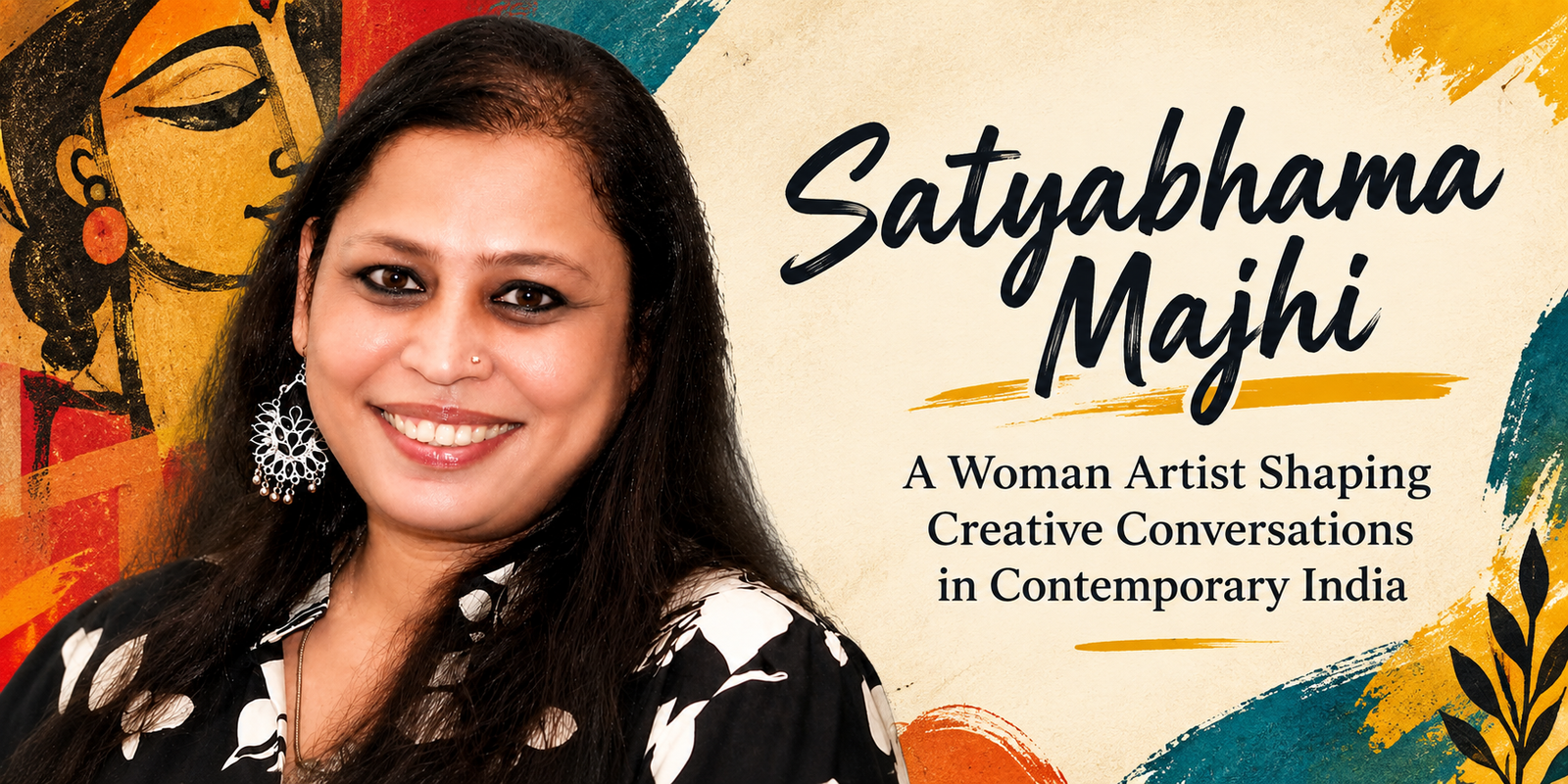
Satyabhama Majhi: The Artist as a Bridge Between Rural, Tribal and Urban India
Contemporary Indian art often reflects the many realities of a country where traditional communities, rapidly changing cities, rural landscapes, and modern institutions exist side by side. Few artistic practices demonstrate this diversity through sustained engagement as clearly as that of Odisha-based artist Satyabhama Majhi. Working across painting, sculpture, installation, photography, mixed media, public art, and community-based practice, Majhi has developed an artistic language that moves between different environments and social contexts.
Based in Bhubaneswar, Odisha, Majhi’s work draws from urban life as well as from long-term engagement with rural and indigenous communities. Her practice does not simply place these worlds next to each other. Instead, it explores the relationships between people, places, memories, cultural traditions, and changing environments.
From the City to the Community
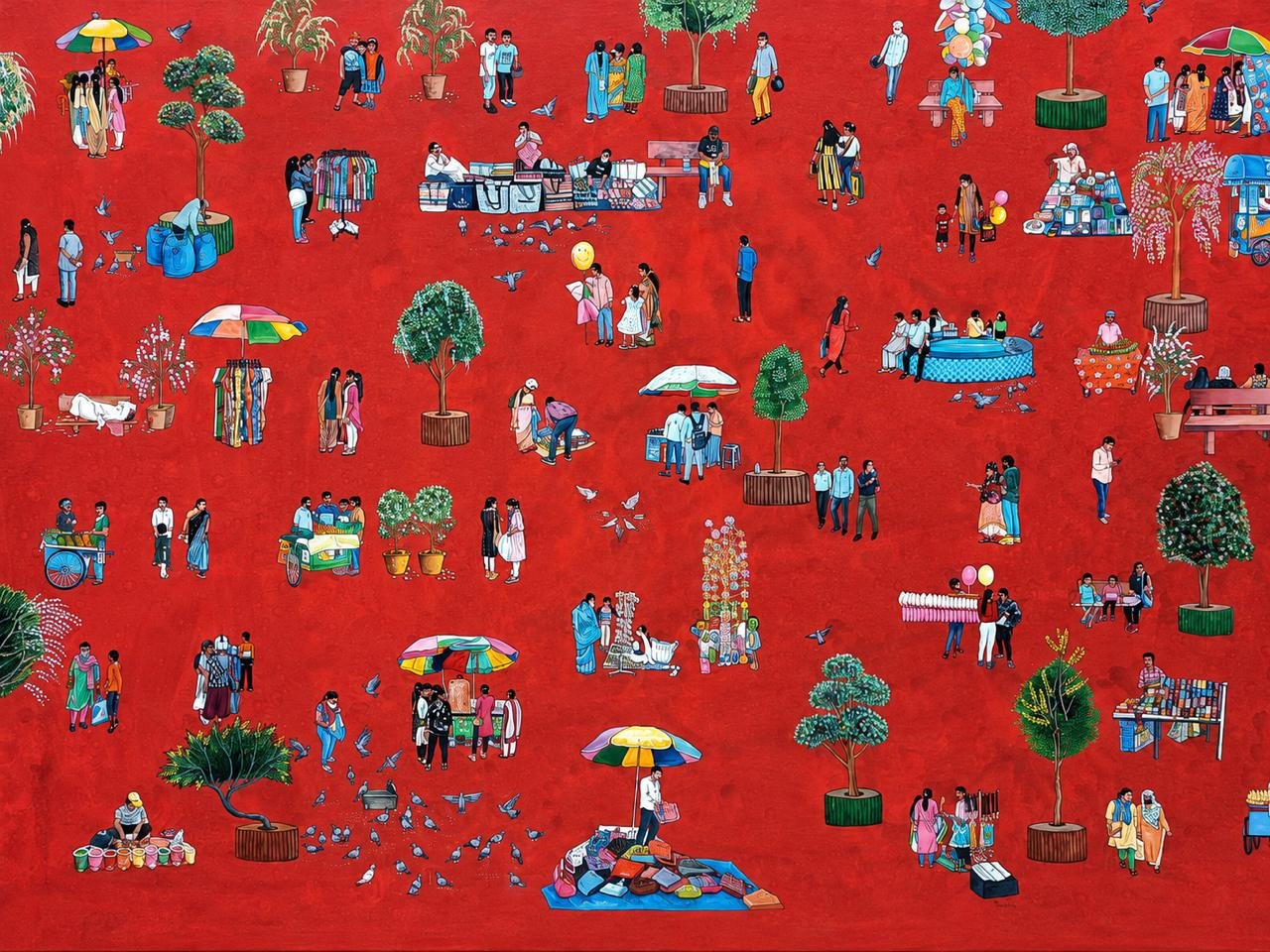
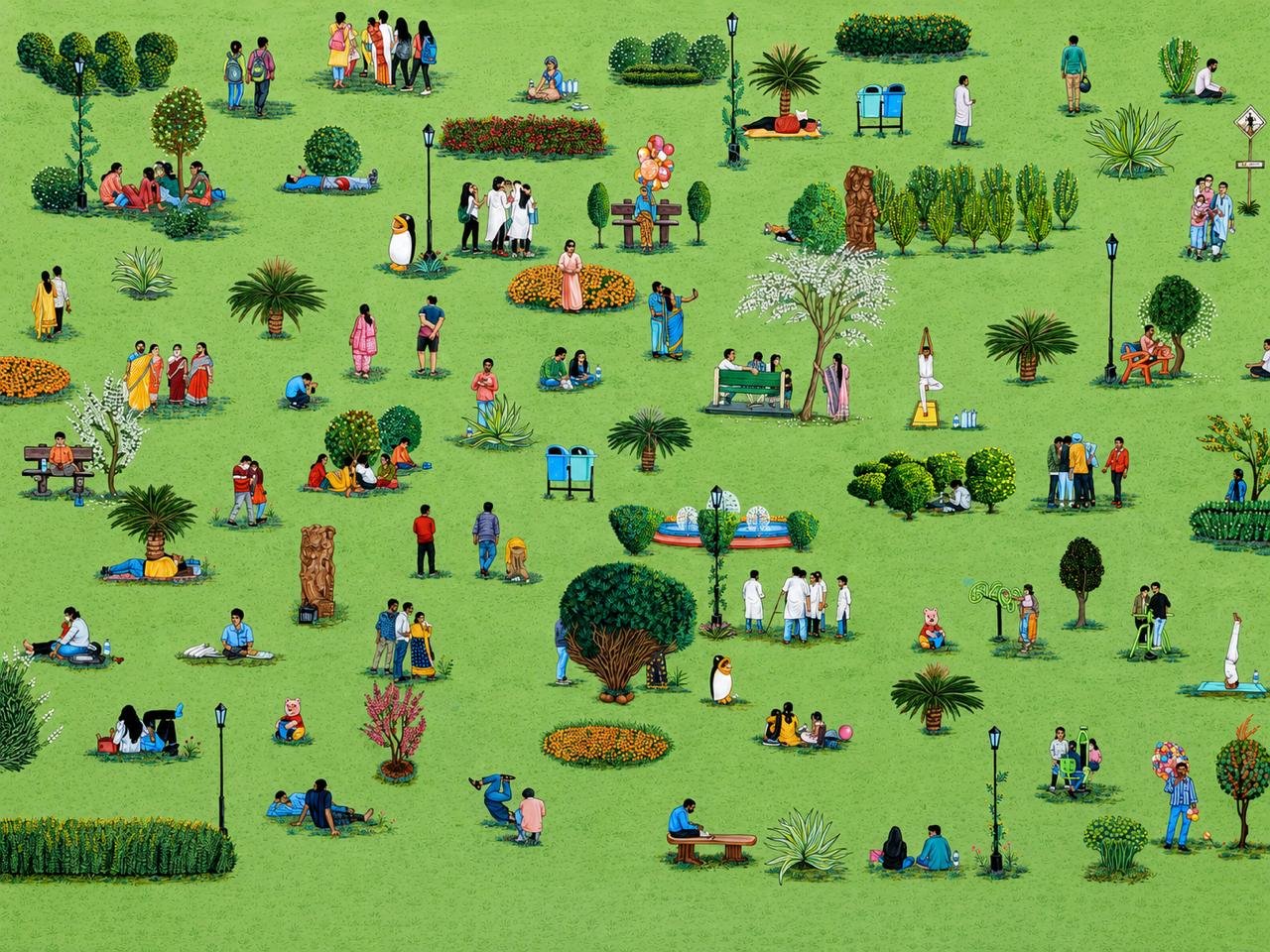
Bhubaneswar provides an important foundation for Majhi’s artistic outlook. As a growing urban centre, the city presents a mixture of modern development, everyday public life, cultural traditions, and changing neighbourhoods. These surroundings have contributed to her interest in ordinary people and everyday experiences.
Rather than limiting contemporary art to galleries and studios, Majhi has frequently taken her practice into public and community spaces. Walls, neighbourhoods, schools, villages, and other shared environments become places where artistic expression can take on a wider social meaning.
Her approach demonstrates that contemporary art can emerge from observation of daily life just as much as from formal studio experimentation.
Connecting Urban and Rural Experiences
One of the distinctive aspects of Majhi’s practice is her movement between urban and rural environments. Her artistic experiences include work with communities, schools, children, artisans, and people living in different social and geographical settings.
This movement allows her to explore contrasts between rapidly changing urban environments and places where traditional knowledge continues to shape everyday life.
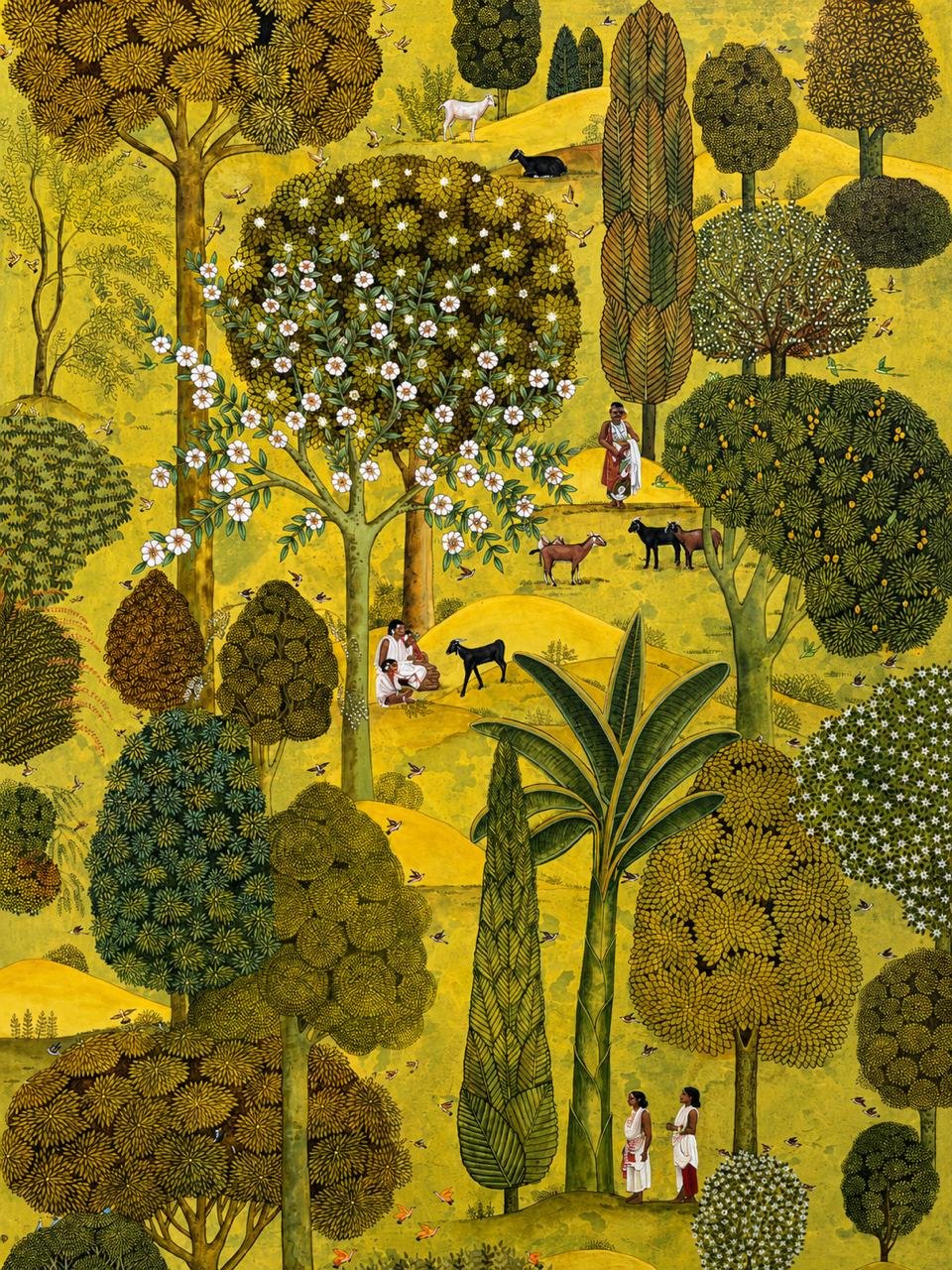
In her work, rural life is not presented simply as an image of the past. Instead, it becomes part of a continuing cultural conversation. Agriculture, local traditions, memories, landscapes, community practices, and relationships with nature can all become sources for contemporary artistic interpretation.
At the same time, her engagement with urban life brings questions of modernization, transformation, public space, and changing social relationships into her visual language.
A Long Engagement With Niyamgiri
Majhi’s sustained engagement with the Dongaria Kondh community and the Niyamgiri landscape in Odisha represents another important dimension of this bridge between different worlds.
Over many years, she has observed cultural practices, livelihood patterns, indigenous visual traditions, and relationships between the community and its natural environment. These experiences have influenced both the subjects and materials of her artistic practice.
The significance of this engagement lies in the process of observation and listening. Instead of treating indigenous culture simply as a source of decorative imagery, Majhi’s practice explores the deeper connections between landscape, knowledge, cultural memory, and everyday life.
Niyamgiri therefore becomes more than a geographical location in her work. It becomes a cultural and visual reference through which questions of identity, environment, tradition, and human movement can be explored.
The Landscape as a Cultural Link
Landscape plays an important role in connecting Majhi’s different areas of artistic experience.
The hills of Niyamgiri, for example, have influenced her recurring use of triangular forms. The triangle can evoke the silhouette of the mountains while also functioning as a visual structure associated with stability, landscape, sacred geography, and cultural symbolism.
This demonstrates how a geographical feature can become transformed into an artistic vocabulary.
Her work also explores the relationship between people and their surroundings. Nature is not merely a background against which human activities occur. It can influence livelihood, cultural practices, memory, colour, architecture, movement, and identity.
Through this approach, landscape becomes a bridge between environmental experience and cultural expression.
Natural Materials Carry Local Meaning
Majhi’s use of natural pigments further strengthens the relationship between place and artistic practice. Materials such as chalk stone, charcoal, turmeric, geru soil, and brown stone have been used in her work to create colours and surfaces.
The importance of these materials extends beyond their visual appearance. Their connection with the earth and traditional methods of colour-making gives them a relationship with cultural memory and local knowledge.
By bringing such materials into contemporary art, Majhi demonstrates how traditional material knowledge can remain relevant within modern artistic practice.
The result is a visual language in which material, place, memory, and artistic experimentation interact with one another.
Working With Children and Communities
Another important part of Majhi’s practice has been her work with children and educational communities. For approximately fifteen years, she has participated in workshops and creative-learning activities involving children in schools and community settings.
Her approach encourages children to observe their surroundings and express their own experiences instead of simply copying predetermined images.
Household activities, trees, animals, festivals, village journeys, memories, and everyday experiences can become subjects for creative exploration.
This work creates another connection between different worlds: the artist and the learner, the classroom and the community, memory and imagination.
It also demonstrates Majhi’s belief that artistic participation can extend beyond professional artists and formal institutions.
Public Art as a Meeting Point
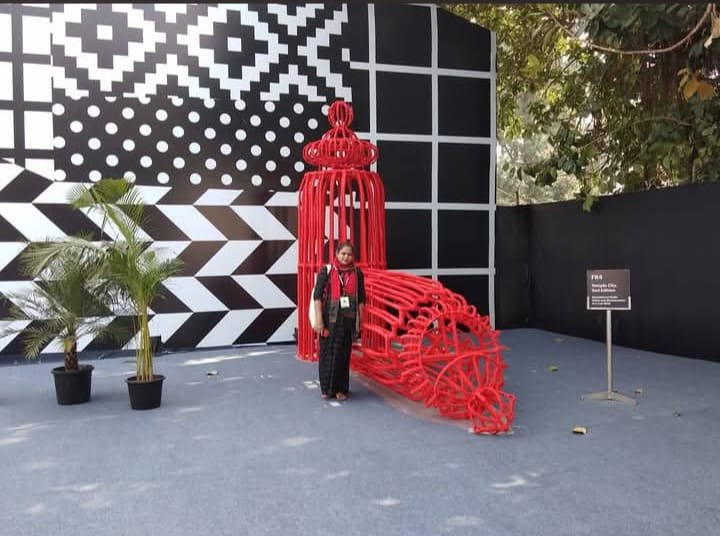
Public art has provided Majhi with another opportunity to connect different communities with contemporary artistic practice. Her involvement in large-scale murals and public-art projects in Odisha has taken artistic expression into spaces used by ordinary people.
Projects and murals associated with places such as Cuttack and Bhubaneswar, as well as public initiatives connected with sporting and cultural events, demonstrate the possibilities of art outside conventional gallery settings.
Works such as Pago and Thought Loom contribute to this broader public-art vocabulary, where scale, location, participation, and accessibility become important parts of the artistic experience.
A public wall can therefore become more than an architectural surface. It can become a meeting point for memory, community identity, creativity, and shared experience.
From Regional Experience to National Representation
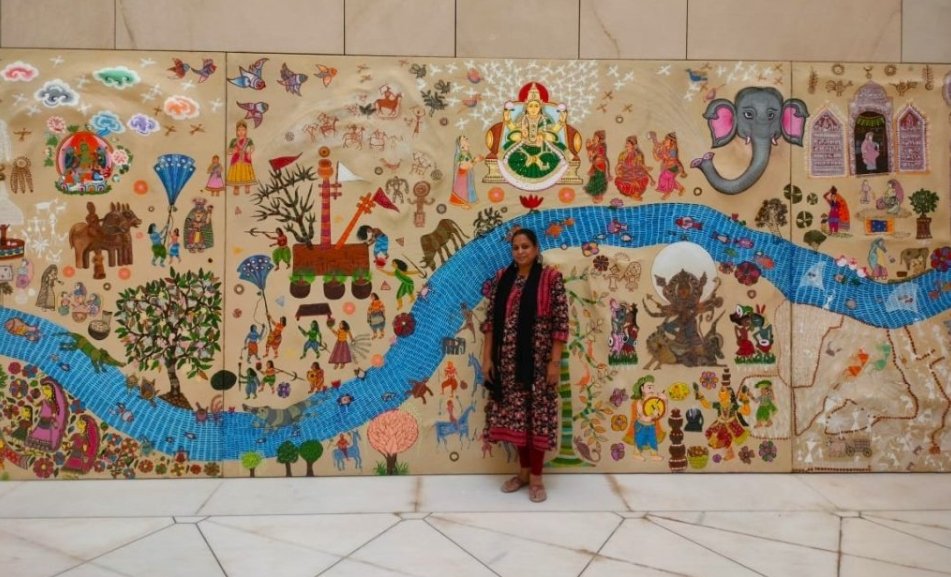
Majhi’s participation in People’s Wall – Jan, Janani and Janmabhumi in 2023 represents a significant example of how regional artistic traditions can enter a national cultural context.
Serving as a Co-Sutradhar and creative contributor, she participated in a collaborative project involving women artists and artisans from different parts of India. The project was created for the New Parliament House through the Lalit Kala Akademi, New Delhi.
The project brought together regional aesthetics, traditional visual languages, and the creative knowledge of women practitioners.
For an artist whose practice has consistently moved between local experience and wider cultural conversations, such a project reflects the larger potential of community-oriented art: local knowledge can become part of a national cultural narrative without losing its regional character.
A Practice Built on Connection
Satyabhama Majhi’s artistic journey can be understood through the idea of connection. Her practice connects city and village, contemporary art and traditional knowledge, individual experience and collective memory, human communities and natural environments.
Her role as an artist also extends beyond making individual artworks. Through curatorial activities, community initiatives, educational workshops, public-art projects, and cultural collaborations, she has participated in creating spaces where different forms of knowledge and creativity can meet.
This approach is particularly relevant to contemporary Indian art, where questions of identity, modernization, ecology, cultural continuity, and social participation increasingly intersect.
Conclusion
Satyabhama Majhi’s work demonstrates that contemporary art can function as a bridge between different environments and experiences. From the streets and neighbourhoods of Bhubaneswar and Cuttack to rural communities and the Niyamgiri landscape, her practice reflects an India where cultural traditions and modern life continuously interact.
Her paintings, natural-pigment works, public-art projects, educational activities, and community collaborations reveal an artistic journey grounded in observation and participation.
Rather than separating rural, tribal, and urban experiences, Majhi brings them into conversation. In doing so, she presents contemporary art not simply as an object to be viewed, but as a way of understanding people, places, memories, cultures, and the changing world around them.