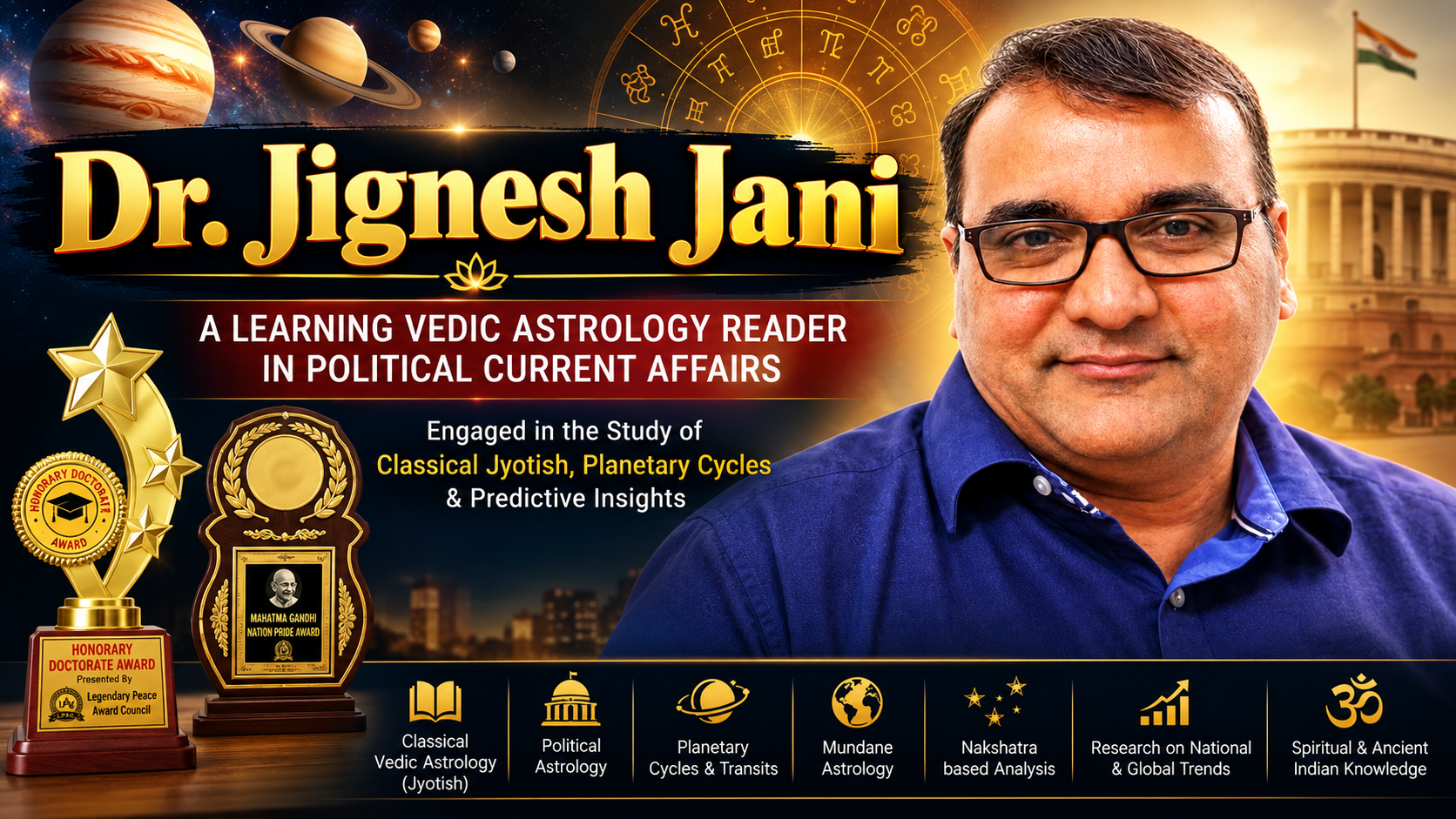
Jignesh Jani Emphasizes Diplomacy Over Predictions in Global Geopolitical Analysis
Ahmedabad | July 10, 2026: Vedic astrology researcher Jignesh Jani has emphasized the importance of diplomacy, responsible leadership, and evidence-based geopolitical analysis while discussing current planetary alignments from the perspective of traditional Vedic astrology. According to Jani, astrology should be viewed as a symbolic system that encourages reflection on broader collective cycles rather than as a scientifically established method for predicting specific international events.
Jani explained that many practitioners of Jyotish study planetary movements to understand symbolic themes that may correspond with periods of social, political, and economic transformation. He noted that the current Mars–Rahu conjunction, traditionally known as Angarak Yoga, is interpreted by many astrologers as representing assertive energy, strategic decision-making, and heightened geopolitical activity.
He also referred to the Saturn–Neptune alignment, which many astrological traditions associate with institutional restructuring, ideological shifts, and changes in global governance. According to Jani, these planetary combinations are often interpreted as encouraging reflection on evolving international relationships rather than forecasting future outcomes.
While discussing these symbolic interpretations, Jani highlighted Jupiter’s traditional role as a planet associated with wisdom, ethics, justice, education, and diplomacy. He said many Vedic astrologers consider Jupiter a positive influence that promotes peaceful dialogue, balanced leadership, and constructive negotiations during times of uncertainty.
Jani stressed that geopolitical developments are influenced by numerous real-world factors, including government policies, economic conditions, diplomatic initiatives, security concerns, and international cooperation. He cautioned against treating astrology as evidence for predicting wars, military actions, or political decisions.
“Planetary alignments may inspire reflection on collective trends, but they do not determine the course of history,” Jani said. “The future depends on the wisdom of leaders, effective diplomacy, international institutions, and the willingness of nations to resolve differences through dialogue instead of conflict.”
Concluding his remarks, Jani encouraged readers to appreciate Vedic astrology as part of India’s traditional knowledge while maintaining a clear distinction between symbolic astrological interpretations and evidence-based geopolitical analysis. He expressed hope that diplomacy, mutual understanding, and international cooperation will continue to guide global decision-makers toward peace, stability, and sustainable development.