How to Build an Always-On Content Engine That Creates Demand
Most businesses do not have a content shortage. They have a system shortage. Ideas appear only when a campaign is about to launch, posts are produced under pressure and expertise remains trapped inside sales calls and founder discussions.
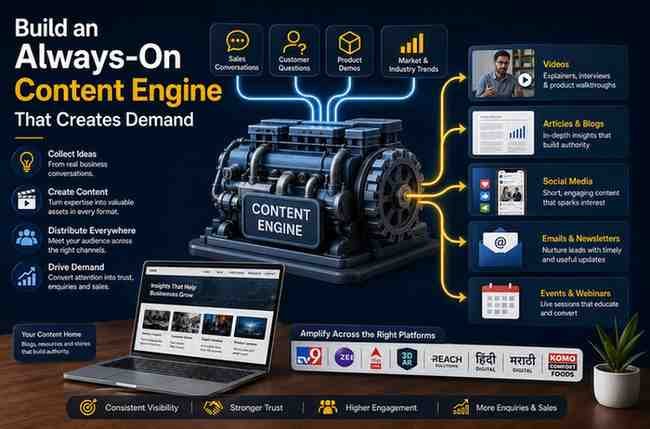
An always-on content engine gives teams a reliable way to collect ideas, turn them into assets and stay visible between campaigns. Instead of treating every article, video or post as a one-off task, the business creates a connected library that helps buyers discover, understand and trust the offer.
Start With a Strong Content Home
Every content engine needs a stable destination. A corporate website with a blog can organise expert articles, customer stories, product updates and category insights into a searchable knowledge base. It gives interested visitors somewhere to go deeper after seeing an ad, video or social post.
The goal is not maximum output. It is to answer real questions: what problem does the business solve, what changes for the customer and what proof makes the choice easier?
Collect Ideas From Real Business Moments
The most credible content often comes from work already happening. Sales questions, product demos, client outcomes and leadership opinions all contain material worth publishing.
A press and media event can produce announcements, interviews, photographs and quotes for follow-up content. A clear explainer-video editing process can turn a product walkthrough, webinar or founder recording into one central asset plus shorter versions. Nonprofits can apply the same discipline through a sustainable NGO social-media strategy, using repeatable themes instead of reactive updates.
Give Each Format One Job
Content works harder when every format has a defined role.
- Discovery: short social posts, timely reminders and video hooks.
- Consideration: explainers, expert interviews, comparisons and proof.
- Action: landing pages, demonstrations, consultation prompts and product pages.
For example, TV9 ticker advertising can reinforce a timely message with frequency, while a Zee show sponsorship can build familiarity around a relevant programme. An ABP expert interview gives a founder or specialist room to explain a point of view. These formats work best when the message and next step are clear before distribution begins.
Adapt One Idea for Different Markets
One core idea can travel across regions without becoming repetitive. An AR product experience can help buyers explore more closely, while a Maharashtra-focused thought-leadership feature can add local context to an expert narrative. Hindi digital and creator campaigns can carry the idea into mobile-first communities, while Marathi OTT advertising can place the same promise in a regional streaming environment.
For FMCG teams, the conversion layer matters too. Product-page optimisation for quick commerce makes the offer easier to understand when shoppers make decisions from thumbnails, claims and pack information.
Review What Compounds
Track which themes attract the right audience, which assets support sales conversations and which formats earn return visits or enquiries. Build more from the ideas that work. A content engine becomes valuable when every asset makes the next campaign faster, clearer and more useful.